
Everything about time management

Master Time Management Even if You Struggle with Planning Time management can feel impossible for many people, especially for those who naturally prefer flexibility over rigid schedules. Long to-do lists, strict calendars, and productivity hacks often overwhelm rather than help. The good news is that effective time management doesn’t have to be stressful. With gentle, adaptable strategies, even non-planners can take control of their time and build routines that stick. Why Time Management Is Hard For some, managing time is challenging because traditional systems don’t fit their natural workflow. Common obstacles include: Overwhelm: Too many tasks with no clear priority. Rigid structures: Fixed schedules that don’t allow flexibility. Procrastination: Delaying tasks until the last minute. Energy fluctuations: Ignoring personal peak productivity times. Decision fatigue: Too many choices lead to reduced focus. These challenges are particularly relevant for MBTI P-types, who thrive on adaptability and spontaneity. Conventional planners often feel restrictive, causing stress rather than support. Understanding Your Personal Planning Style Before mastering time management, it’s essential to know your personal planning style. Are you a J-type who enjoys structure, or a P-type who prefers flexibility? Understanding your tendencies helps you choose strategies that naturally align with how you think and work. If you’re unsure, try the Mopmop Type Test, designed to help you discover your planning style in a gentle, low-pressure way. Knowing your type can make scheduling less daunting and more intuitive. “Check your Mopmop type!” Scheduling Techniques Once you know your planning style, you can adopt techniques that fit you: Time-blocking in broad themes: Instead of strict hours, allocate chunks like “creative morning” or “admin afternoon.” Prioritize key tasks: Focus on 2–3 essential items per day rather than a long checklist. Energy-based scheduling: Plan demanding tasks during your peak focus periods. Micro-tasks: Break big projects into smaller steps for momentum and motivation. Reflection breaks: A few minutes at the end of the day to review accomplishments and adjust plans. These techniques are especially effective for P-types who need flexibility without losing direction. P-Type Friendly Routines P-types can benefit from routines that support productivity without imposing pressure: 1. Use Mopmop App & Services: Track tasks and goals in a flexible environment. Services like Tiny-Win Memories encourage celebrating small achievements, Energy Check-Ins help monitor focus, King Nudges provide gentle reminders, and Rhythm Blocks allow theme-based scheduling. 2. Undated planners or flexible calendars: Leave room to adjust priorities and move tasks freely. 3. Theme-based days: Assign broad categories instead of minute-by-minute schedules. 4. Quick capture methods: Brain dumps or sticky notes to organize thoughts without overcomplicating. 5. Brief daily reflections: One-sentence reviews are enough to stay on track. The key is to create routines that respect your natural rhythm while keeping you productive and motivated. Mastering time management doesn’t require rigid schedules or overwhelming strategies. By understanding your personal planning style and using flexible tools and routines, you can take control of your time, stay productive, and maintain balance without stress. Start small, stay flexible, and gradually build routines that work for you. Do you want to get better at time management? Download mopmop!
What Is the Myers-Briggs Type Indicator?
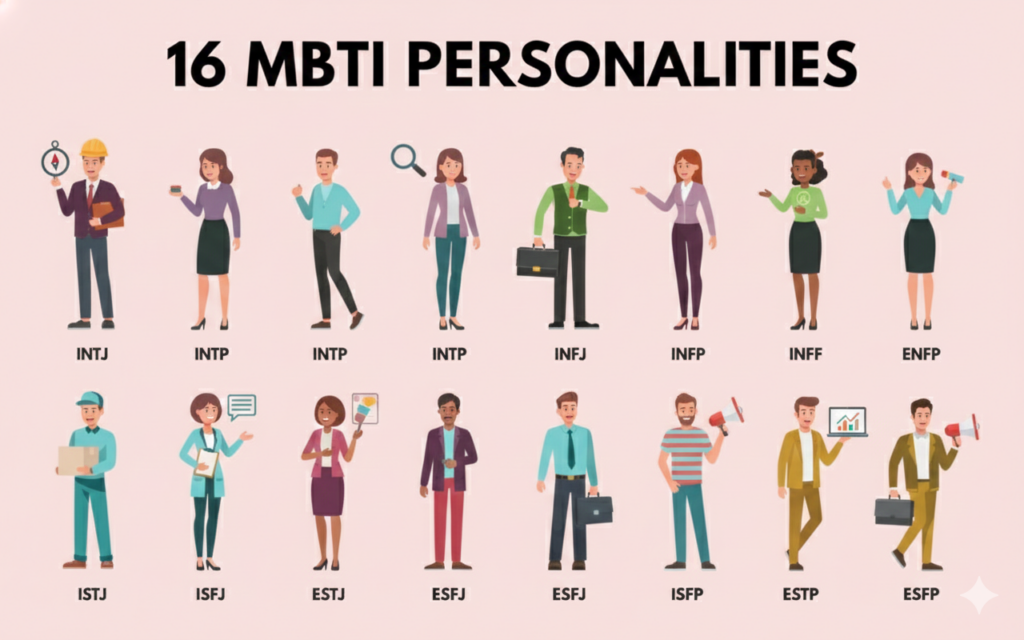
Understanding the Myers-Briggs Type Indicator (MBTI) The Myers-Briggs Type Indicator (MBTI) is one of the most popular personality frameworks used today, offering insight into how people think, make decisions, and move through the world. But beyond personality traits, MBTI also provides valuable clues about how you naturally plan, organize, and manage your time. In this post, we’ll explore the origins of MBTI, break down the 16 personality types, explain how each type tends to approach planning, and share gentle, P-type-friendly strategies you can start using right away. The Origin of MBTI and the 16 Personality Types Explained The MBTI was developed by Katharine Cook Briggs and her daughter, Isabel Briggs Myers, during the mid-20th century. Drawing inspiration from Carl Jung’s theory of psychological types, they created a tool that helps people understand their preferences in four key areas: Extraversion (E) vs. Introversion (I):Where you get your energy. From the outer world or your inner world. Sensing (S) vs. Intuition (N):How you take in information. Through concrete facts or abstract patterns. Thinking (T) vs. Feeling (F):How you make decisions. Using logic or personal values. Judging (J) vs. Perceiving (P):How you structure your life. With plans or with flexibility. Combining these preferences creates 16 personality types, each with distinct ways of processing information and interacting with the world. Types like ENFP, ISTJ, INFJ, and ESTP all reflect different strengths, motivations, and patterns which naturally affect how someone likes to plan. How Each Type Approaches Planning Not everyone plans the same way and MBTI explains why. Here’s how the major categories typically influence planning style: J-types (Judging) J-types are often drawn to structure and predictability. They enjoy routines, timelines, and clear organization. Planning ahead helps them feel grounded. A traditional planner with calendars, schedules, and checklists works well for them. P-types (Perceiving) P-types thrive with flexibility. Strict schedules feel restrictive, and overly detailed systems cause stress rather than clarity. They prefer spontaneous adjustments, open layouts, and adaptable planning tools. What else? Sensing types (S-types) S-types often prefer practical, step-by-step plans. They do well with simple to-do lists, action items, and concrete reminders. Intuitive types (N-types) N-types tend to think big-picture. They excel with vision boards, theme-based planning, and tools that help them stay connected to their long-term goals. Thinking types (T-types) T-types plan logically and prioritize efficiency. Their planning style is often analytical, structured, and focused on outcomes. Feeling types (F-types) F-types plan based on emotional energy, balance, and relationships. They do best with gentle systems that allow space for reflection and well-being. Understanding these tendencies helps you select a planning method that feels natural instead of forced. P-Type Friendly Planning Strategies P-types often struggle the most with conventional planners. It’s not because they’re disorganized, but because their minds prefer freedom. Here are P-friendly strategies to make planning feel lighter and more sustainable: Use undated planners: To remove pressure and guilt. Keep daily plans simple: Aim for two or three main tasks. Plan in loose themes: Instead of rigid timelines. Capture ideas quickly: Through brain dumps or free-form notes. Allow plenty of open space: In your schedule for flexibility. Reflect briefly: One sentence per day is enough. Refresh anytime: Without starting over. These techniques work with the natural flow of P-types, helping them stay consistent without feeling boxed in. MBTI’S Role The MBTI isn’t just a personality tool. It can also help you build a time-management style that works with your natural strengths. Whether you’re a structured J-type or a flexible P-type, choosing the right strategies makes managing your time easier, more sustainable, and more aligned with who you really are. For more tips on how P-types can manage their time effectively, check out our Time Management guide. “Get some tips!” Check your MBTI Result
Mopmop type test: Find your planning style
Find your planning stylewith a mopmop type test Discover your personal planning style with this mopmop type test. Take the test now to find the planning approach that truly fits you. Find your planning style with the mopmop type test Have you ever wondered why some planning methods work perfectly for your friends but never for you? Maybe you’ve tried dozens of to-do apps, productivity templates, or paper planners, yet nothing seems to stick. If this sounds familiar, the problem isn’t your discipline. It’s that your planning method might not match your natural working style. This is where the mopmop type test comes in. This simple, insight-driven test helps you understand why you plan the way you do and what type of system actually fits your lifestyle. Instead of forcing yourself into productivity habits that don’t suit you, the mopmop type test guides you toward a planning style that feels comfortable, intuitive, and sustainable. What is the mopmop type-test? The mopmop type test is a quick assessment designed to reveal your personal planning personality. Everyone approaches tasks differently. Some people love detailed schedules, while others thrive on flexibility and big-picture thinking. The test analyzes your tendencies, preferences, and behaviors to place you into a specific planning type. Each result provides insights into how you handle deadlines, how you react to unexpected changes, and what kind of system helps you stay organized without feeling overwhelmed. Learn more about managing your time effectively based on your planning type in our Time Management guide. “Check some time management tips” Whether you’re a meticulous planner or a spontaneous creator, the mopmop type test helps you understand yourself better so you can build routines that actually work. Why knowing your planning style matters Understanding your planning style can dramatically improve the way you manage your time and energy. When you work with your natural preferences instead of against them, planning becomes easier and even enjoyable. Here’s why your planning style matters: 1. You save time and reduce stress.Planning in a way that suits you allows you to focus on getting things done instead of fighting your system. 2. You avoid burnout.Using the wrong planning method often leads to frustration and inconsistency. The right style keeps you motivated. 3. You stay more consistent.People naturally stick to systems that feel intuitive. Once you know your planning type, you can create habits that last. 4. You improve your productivity effortlessly.The mopmop type test doesn’t push strict rules. It simply helps you discover the most natural way for you to stay organized. When your planning style aligns with your personality, everything from work tasks to daily routines flows more smoothly. How the mopmop type test works Taking the mopmop type test is quick and beginner-friendly. The process is simple: 1. Answer a short series of questions The test asks about your habits, preferences, and reactions to different planning situations. There are no right or wrong answers. Just be honest about what feels true to you. 2. Get matched with your planning type After completing the questions, you’ll receive a result that reflects how you naturally approach planning. Each type comes with explanations, strengths, challenges, and recommended planning strategies. 3. Apply your personalized tips You’ll get actionable suggestions you can immediately use whether you prefer structured checklists, flexible timelines, visual boards, or minimal planning. The goal is not to change who you are but to help you work in a way that feels authentic and stress-free. Ready to discover your planning style? If you’re tired of trying productivity methods that never seem to fit, it’s time to find a system that actually works for you. Take the mopmop type test today and uncover the planning approach that truly supports your goals, personality, and lifestyle. Start the mopmop type test now and find your planning style! Find your type!