
Understanding
the Myers-Briggs Type Indicator (MBTI)
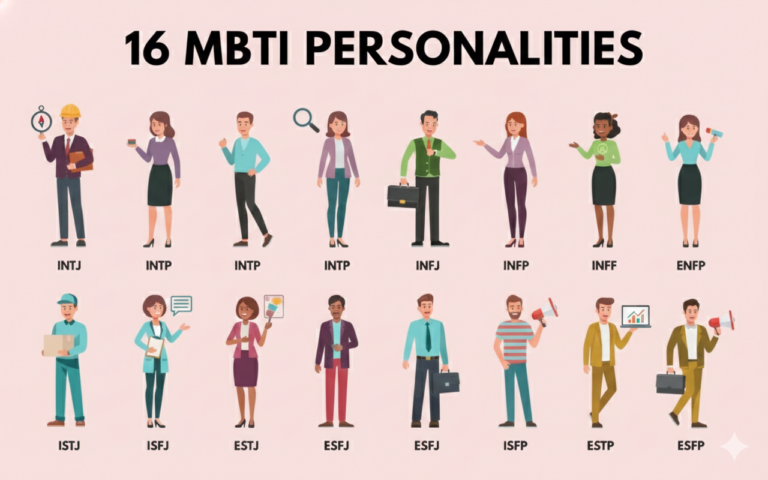
The Myers-Briggs Type Indicator (MBTI) is one of the most popular personality frameworks used today,
offering insight into how people think, make decisions, and move through the world. But beyond personality traits,
MBTI also provides valuable clues about how you naturally plan, organize, and manage your time. In this post,
we’ll explore the origins of MBTI, break down the 16 personality types, explain how each type tends to
approach planning, and share gentle, P-type-friendly strategies you can start using right away.
The Origin of MBTI
and the 16 Personality Types Explained
The MBTI was developed by Katharine Cook Briggs and her daughter, Isabel Briggs Myers, during the mid-20th century.
Drawing inspiration from Carl Jung’s theory of psychological types, they created a tool
that helps people understand their preferences in four key areas:
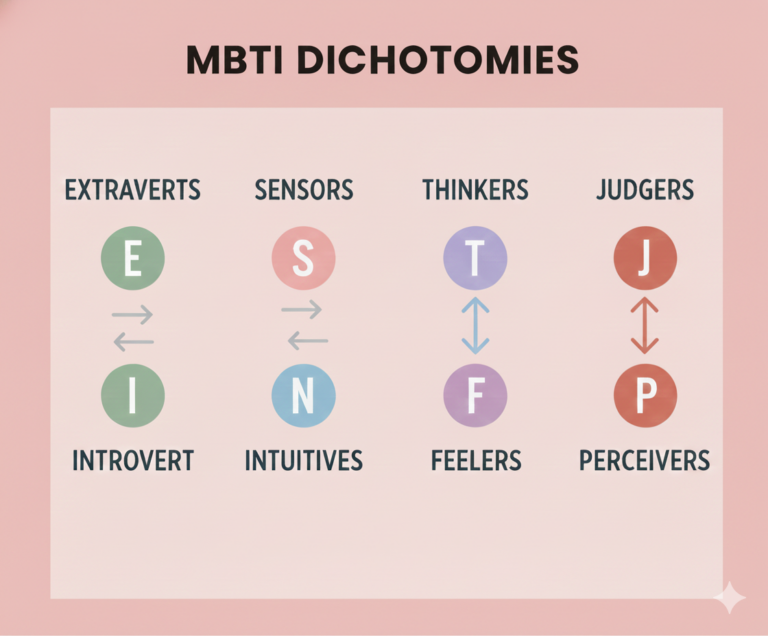
Extraversion (E) vs. Introversion (I):
Where you get your energy. From the outer world or your inner world.
Sensing (S) vs. Intuition (N):
How you take in information. Through concrete facts or abstract patterns.
Thinking (T) vs. Feeling (F):
How you make decisions. Using logic or personal values.
Judging (J) vs. Perceiving (P):
How you structure your life. With plans or with flexibility.
Combining these preferences creates 16 personality types,
each with distinct ways of processing information and interacting with the world.
Types like ENFP, ISTJ, INFJ, and ESTP all reflect different strengths, motivations, and patterns
which naturally affect how someone likes to plan.
How Each Type Approaches Planning
Not everyone plans the same way and MBTI explains why. Here’s how the major categories typically influence planning style:

J-types (Judging)
J-types are often drawn to structure and predictability.
They enjoy routines, timelines, and clear organization. Planning ahead helps them feel grounded.
A traditional planner with calendars, schedules, and checklists works well for them.
P-types (Perceiving)
P-types thrive with flexibility. Strict schedules feel restrictive, and overly detailed systems cause stress rather than clarity.
They prefer spontaneous adjustments, open layouts, and adaptable planning tools.
What else?
Sensing types (S-types)
S-types often prefer practical, step-by-step plans.
They do well with simple to-do lists, action items, and concrete reminders.
Intuitive types (N-types)
N-types tend to think big-picture. They excel with vision boards, theme-based planning,
and tools that help them stay connected to their long-term goals.
Thinking types (T-types)
T-types plan logically and prioritize efficiency.
Their planning style is often analytical, structured, and focused on outcomes.
Feeling types (F-types)
F-types plan based on emotional energy, balance, and relationships.
They do best with gentle systems that allow space for reflection and well-being.
Understanding these tendencies helps you select a planning method that feels natural instead of forced.
P-Type Friendly Planning Strategies

P-types often struggle the most with conventional planners.
It’s not because they’re disorganized, but because their minds prefer freedom.
Here are P-friendly strategies to make planning feel lighter and more sustainable:
Use undated planners: To remove pressure and guilt.
Keep daily plans simple: Aim for two or three main tasks.
Plan in loose themes: Instead of rigid timelines.
Capture ideas quickly: Through brain dumps or free-form notes.
Allow plenty of open space: In your schedule for flexibility.
Reflect briefly: One sentence per day is enough.
Refresh anytime: Without starting over.
These techniques work with the natural flow of P-types, helping them stay consistent without feeling boxed in.
MBTI'S Role
The MBTI isn’t just a personality tool.
It can also help you build a time-management style that works with your natural strengths.
Whether you’re a structured J-type or a flexible P-type, choosing the right strategies makes managing your time easier,
more sustainable, and more aligned with who you really are.
For more tips on how P-types can manage their time effectively, check out our Time Management guide.